Tiv Youth Congress

TIV YOUTH CONGRESS Headline Animator

Tuesday, 20 October 2015

BREAKING NEWS:- Appeal Court adjourns Saraki’s suit indefinitely

SarakiABUJA—Abuja Division of the Court of Appeal, yesterday, granted an indefinite adjournment in the suit filed by the Senate President, Dr. Bukola Saraki, to stop the Federal Government from opening its case against him before the Code of Conduct Tribunal.
Saraki is facing charges for alleged false declaration of assets.
Though the appellate court initially slated yesterday to deliver judgment on whether or not Saraki should submit himself before the Justice Danladi Umar-led panel of CCT tomorrow, a senior registrar of the court, Mrs. Christine Aruna, informed all the parties that the judgment has been deferred indefinitely.
Effort by newsmen to confirm why the Justice Moore Adumein panel decided to postpone the judgment met a brick wall, yesterday.
The main entrance to the court was kept under lock and key as lawyers, Senators, journalists and supporters of the Senate President, who besieged the appellate court premises in their numbers, could not gain entrance into the court room.
Reason for adjournment
A highly-placed source at the court disclosed to Vanguard yesterday that the judgment had been ready since Saturday.
The source, who craved anonymity, insisted that the “11th-hour deferment of judgment on Saraki’s appeal” was not unconnected with the ongoing screening of ministerial nominees that were forwarded to the Senate by the Presidency.
An aide to the Senate President, yesterday, blamed the postponement of the judgment, earlier fixed for 2p.m. yesterday, on “last minute intervention by a governor from the North-West, the Presidency and some highly-placed chieftains of All Progressives Congress, APC.
“You can see that the courtroom is even under lock and key, which is not the usual practice when the appeal court is not sitting. Don’t you wonder why today should be an exception?”
The Federal Government had on Friday, told ‎the appellate court that it has garnered sufficient evidence to establish that Saraki, as a public officer, acquired several assets beyond his legitimate earnings.
FG, through its lead prosecutor, Mr. Rotimi Jacobs, SAN, equally told the appellate court that five witnesses it lined-up against the Senate President, have all expressed their readiness to appear before the CCT tomorrow to testify and tender exhibits against him.

Among those that FG billed to give oral testimony against Saraki included the erstwhile Minister of the Federal Capital Territory and present governor of Kaduna State, Mallam Nasir El-Rufai.
‎Specifically, El-Rufai is expected to testify that he was the one that sold one of the assets that Saraki bought in Abuja, which the government alleged that he failed to list among the assets he acquired while in office as the governor of Kwara State.
The prosecuting counsel, maintained before the appellate court that Saraki has already been furnished with all the proof of evidence against him, including copies of four separate ‎assets declaration forms that he earlier submitted before the Code of Conduct Bureau, CCB.
‎Therefore, FG, urged the appellate court to dismiss the appeal that Saraki lodged before it and order him to go to ‎the CCT and clear his name.
Saraki is in his appeal, challenging the legal propriety of the 13-count ‎criminal charge that was preferred against him by the Federal Ministry of Justice.
He was among other offences, alleged to have owned and operated foreign bank accounts while being a public officer.
However, Saraki, aside challenging the charge, also queried the constitutionality of the warrant of arrest that was initially issued against him by Chairman of the CCT, Justice Umar.
Besides, the embattled Senate President, through his team of lawyers led by a former President of the Nigerian Bar Association, NBA, Mr. J.B. Daudu, SAN, wants the higher court to ascertain whether the Justice Umar-led panel subscribed to the appropriate legal procedure when ‎it ordered him to mount the dock and enter his plea to the charge despite preliminary objections against his trial.
He raised 12 grounds of appeal against the CCT, supported by a 16-paragraphed affidavit and four exhibits.
Saraki also deposed another 17-paragraphed affidavit of urgency, wherein he urged the higher court to intervene and protect him from what he described as “a politically motivated witch-hunt”.
Out of the 12-grounds, five of them are basically seeking to invalidate the charge against Saraki.
‎‎
He is begging the appellate court to suspend the proceeding of the tribunal pending the hearing and determination of his substantive appeal against the Justice Umar-led panel.
The appellate court had on October 8, okayed accelerated hearing on the matter.
When the matter came up on Friday, the‎ Justice Adumein-led panel‎,‎ in a short ruling, struck out Saraki’s application for a stay of further proceedings of the tribunal.
It was the view of the panel that the application ‎was already overtaken by events.
Earlier, Saraki had through his ‎lawyer, Mr. Daudu, SAN, argued that the CCT erred in law by going ahead with his trial despite that fact that “it was not properly constituted”.
He contended that whereas the constitution provided for a three-man panel to ‎sit over cases brought before the tribunal, he said that only two Justices sat on September 22 when he was docked.
According to him, the composition of the tribunal was in violation of paragraphs 15(1) of the 1999 constitution, as amended.
Daudu maintained ‎that the tribunal was wrong in assuming criminal jurisdiction against the Senate President when it was not listed in the constitution as a superior court of record.
He described the CCT as an “inferior court”, saying it does not in any way, share ‎concurrent jurisdiction with the Federal High Court.
He therefore urged the appeal court to nullify the proceedings of the tribunal against Saraki and also set aside the criminal charges filed against him by the federal government for being illegal and unlawful.
Nevertheless, FG, bent on going ahead with the case, asked the appellate court to dismiss Saraki’s arguments as baseless and grossly lacking in merit.
Jacobs, SAN, argued that ‎the tribunal was properly constituted and empowered to try the accused person.
He urged the court to invoke the Interpretation Act to resolve the issue on whether the two-man panel had indeed formed a quorum as envisaged by the law.
More so, the prosecuting counsel ‎submitted that the tribunal has criminal jurisdiction hence the use of words like “guilty” and “punishment” in the law that established it.

“We urge your lordships to dismiss this appeal and order the appellate to go before the CCT and face criminal charges against him. We have gathered enough evidence to prove that he made anticipatory assets declaration”, Rotimi added.

‎Saraki was in the charge before the CCT, marked ABT/01/15 and dated September 11, 2015, alleged to have falsely declared his assets, contrary to the constitutionally requirement.
He was accused of deliberately manipulating the assets declaration form that he filed prior to his assumption of office as the Senate President, by making anticipatory declaration of assets.
The offence was said to have been committed while Saraki held sway as a governor.
‎He was also accused of breaching section 2 of the ‎CCB and Tribunal Act, an offence punishable under section 23(2) of the Act and paragraph 9 of the said Fifth Schedule of the 1999 Constitution, as amended.
FG alleged that Saraki claimed that he owned and acquired No 15A and 15B Mc Donald, Ikoyi, Lagos, through his company, Carlisle Properties Limited in 2000, when the said property was actually sold by the Implementation Committee of the Federal Government landed properties in 2006 to his companies, Tiny Tee Limited and Vitti Oil Limited for the aggregate sum of N396, 150, 000, 00.
He was alleged to have made false declaration on or about June 3, 2011, by refusing to declare plot ‎2A Glover Road, Ikoyi, Lagos, which he acquired between 2007 and 2008 through his company from the Central Bank of Nigeria for a total sum of N325, 000, 000, 00.
Similarly, Saraki was said to have refused to declare No1 Tagnus street, Maitama, Abuja, which he claimed to have acquired in November 1996 from one David Baba Akawu.
Some of his alleged offence while in office as governor, which are said to be punishable under section 15(1) and (2) of the CCB and Tribunal Act, Cap C15, Laws of the Federation of Nigeria, 2004, were allegedly committed between October 2006 and May 2007.
His actions were classified as a gross violation of the Fifth Schedule of the Constitution of the Federal Republic of Nigeria 1999, as amended.

Saraki has since pleaded not guilty to all the charges against him

BREAKINING NEWS:-N33.8bn debt: Nigeria gives Ghana February ultimatum

Nigerian gas company, N-Gas, the main supplier of gas to Ghana’s Volta River Authority through the West African Gas Pipeline, has given the VRA up to the end of February 2016 to clear its outstanding debt of $171.5m (N33.79bn).
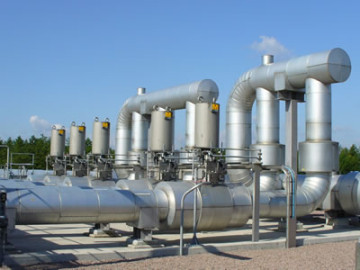
The N-Gas buys gas from oil companies in Nigeria and transport the commodity to its customers in Benin, Togo and Ghana through the $1bn WAGP, which is operated by the West African Gas Pipeline Company.
The N-Gas had recently said it would cut gas supply by 70 per cent to Ghana’s main power generation company by Friday, October 16, 2015 due to unpaid debts of $181m.
The VRA was said to have paid $9.5m last Friday out of the $181m debt for gas supplied from August 2014 to this month.
Sources close to the team that met the N-Gas officials last week to negotiate the payment terms told The Finder that the $171.5m was to be paid in three tranches from now to the end of February 2016, according toGhanaWeb.
The sources, however, declined to give the breakdown of the payment dates and how much would be paid for each tranche.
The debt covers gas supplied to the VRA and the cost of supply and transportation of the commodity from Nigeria to Ghana.
It was reported that as of July this year, the VRA owed banks to the tune of over $1.3bn, and that it would be very difficult for the company to secure a loan from any bank in Ghana to pay its debt to N-Gas.
This means the Government of Ghana, which is the 100 per cent owner of the VRA, will have to look for money to bail out the firm in order to ensure that the N-Gas does not cut gas supply to the country.
The N-Gas had deferred a plan to slash gas exports to Ghana beginning last Friday over the unpaid debt, compelling the country to pay $9.5m and ask for time to come up with the rest.
The VRA received gas and pipeline-related transport services totalling $231m, but paid only $50m, with an outstanding balance of $181m. It, therefore, owes WAPCo $103m.
Ghana gets about 25 per cent of its power supply through gas from Nigeria, which flows through the pipeline via Benin and Togo, and the threat by the N-Gas to reduce volumes by 70 per cent would have raised the cost of supply.
The N-Gas is jointly owned by Shell Petroleum Development Company, Chevron Nigeria Limited and the Nigerian National Petroleum Corporation.
The International Project Agreement signed in May 2003 by WAPCo and the governments of Benin, Ghana, Nigeria and Togo, with the secretariat of the Economic Community of West African States as witness, provides that the N-Gas be allocated a space in the pipeline that can transport up to 200 million standard cubic feet of gas per day.
Ghana has a deal with Nigeria to receive a contractual 120 million standard cubic feet of gas daily.

BREAKING NEWS:- Ortom: Suswam left N169billion debt in Benue State Before Leaving Office.

Former governor of Nigeria’s central state of Benue, Gabriel Suswam left a crushing N169billion debt in the state, his successor,  Samuel Ortom has revealed.
Ortom who revealed the humongous debt profile  at a stakeholders’ forum in Makurdi, said the debt was discovered during a verification he ordered on his assumption of office on May 29.
“Ours is the first administration since the creation of Benue State that met a deficit treasury on assumption of office. To worsen matters, the previous administration attempted to foist further financial burden on the state by employing about 5,000 workers and creating first class stools at its exit point.”
The governor said he met a situation where salaries and pensions had not been paid and everything was at a standstill.
 “While we took steps to address the situation, we also embarked on a debt verification. We obtained initial preliminary figures of N90 billion, which the Ministry of Finance gave us. The transition committee turned in a figure of over N130 billion after its painstaking exercise, saying the amount was not exhaustive, as it did not get access into some aspects of the state and local government financial profiles.“As the government updated its records during compilation of figures for the Federal Government bailout, the amount increased to N169 billion, yet revelations continue to crop up. Of this amount, over N69billion was being owed state and local government workers as salaries, pensions and gratuities.”
Ortom said his administration discovered questionable transactions involving billions of naira in the government shares in companies, loans, bonds arrangements, SURE-P and government business.
“The need to get to the root of all these, especially as the people demanded to know why the state had been brought to its knees, necessitated the setting up of commissions of enquiry, which are carrying out assignments.”
He said the state was forced to secure N10billion loan to pay two months’ salaries and meet critical obligations.
“We also sought and obtained permission from the House of Assembly to secure another N5.5billion to pay counterpart funding for development projects with partners, so as to retain them in the state. The amount will soon be accessed and it is hoped that it will attract at least a matching amount into the state.”

Ortom said he could not ratify the appointment of the 5,000 workers recruited into the civil service in the twilight of his predecessor’s administration, as there was no money to pay their salary.
He added that investigations showed that the state and local government wage bills of close to N4billion appeared to be bloated and were being verified.
On the bailout funds from the Federal Government, the governor said arrears of local and state government pensions and gratuities were not covered by the funds.
“A few days ago we received bailout funds for the payment of salary arrears at the local government and state levels. We accessed N15.5billion for the payment of teachers’ and local government workers’ salary arrears, as well as N12.5 for state government workers.
“Unfortunately, these funds may not clear all salary arrears. Local and state government pensions and gratuities have not been covered by the funds. We, however, thanked President Muhammadu Buhari for the initiative, which we believe will ameliorate the plight of and motivate workers at the local and state levels to offer their best, to confront the challenges.”
The governor said he had trimmed his government’s size through the reduction of ministries from 17 to 13 and special advisers from 28 to 20.
He took the opportunity to unveil the state’s development blueprint, which he called: ‘Our Collective Vision for A New Benue.

Boko Haram: Buhari, Service Chiefs didn’t discuss deadline extension – Vande

Nigeria’s chief of defence staff, Abayomi Olonishakin, on Monday led other service chiefs to a meeting with President Muhammadu Buhari.
The meeting centred on the war against Boko Haram insurgency.
Speaking with state house correspondents at the end of the meeting, Olonisakin ‎explained that the constraints and successes of the operation were reviewed, ahead of the president’s December deadline to defeat Boko Haram.“We briefed the president on the security situation on ground after a 60-day review and we had to brief him on the challenges to ensure that the mandate we have is properly delivered,” he said.
“Of course, the challenges we are looking at are the issues of probably, the weather as it were and some other logistics that we feel we should have so that the mandate can be quickly delivered.”‎
On the possibility of an extension to the December deadline, he said: “We have not said that. The mandate is that we should clear Boko Haram from the occupied territories and ensure that we reclaim all the lost grounds. That is exactly what we are doing.
“It is a military operation and military operations have timelines and these timelines, we are working on them assiduously.”Aliyu Ismaila, permanent secretary at the ministry of defence, said Buhari was happy with the progress report and remained optimistic that the war against insurgency was on track.
“We are here to brief the president on the situation of what armed forces have been doing in the north-east and the south-south. That is exactly what we discussed with Mr. President.
“The directive is that we should continue what we have been doing; and in the next few days, there will be another meeting. But by and large, the president is excited and confident that the leadership of the Nigerian armed forces will do us proud.”   www.tivyouthcongress.blogspot.com

Friday, 28 August 2015

EXPOSING THE WICKEDNESS OF CORRUPTION:- TY Danjuma`s Oil Wells & The Murmuring Of Nigerians


Theophilus Danjuma is not a person the Biafran people will forget in a hurry. He supervised the brutal killing of GeneralAguiyi Ironsi, the first military head of state of Nigeria. He was among the troops that invaded the 
Biafran territory during the civil war and was fabled to be heartless in the discharge of his duties towards Nigeria.
Theophilus Danjuma became a general in the Nigerian Army and it was said that he convinced Obasanjo to become Nigeria’s head of State after the assassination of fellow Biafran killer man, General Murtala Mohammed in 1976.
During the Obasanjo recycling presidential jamboree, Danjuma posited that if Obasanjo fails to win the 1999 presidential election, he will run away from Nigeria. Obasanjo won the election and rewarded him with the post of Minister for Defence and charged him with dismantling the military structure capable of truncating his democracy.
The sharing of national cake of oil block to PDP party men in the most non transparent manner is one of the  fallout of the Nigerian brand of dictatorial democracy. Oil blocks worth about $2billion dollars auction value could be sold to a party faithful for as low as $500million dollars  .The facilitators share the difference  between the auction value and the real value among themselves  in the ratio of 50:50. Or 60:40 in favor of the awarder, the facilitator or the government middleman who could be fronting for the strongman  in the state house..
Theophilus Danjuma  got his on a platter of gold. Late Head of State  Sani Abacha awarded the Oil Prospecting License (OPL) 246 to SAPETRO in February 1988. The block covers a total area of 2,590 square kilometers .SAPETRO partnered with Total Upstream Nigeria (TUPNI) and Brasoil Oil Services Company Limited (Petrobas) to start prospecting on OPL246.  Akpo, a condensate field was discovered in April 2000 with drilling commencing in 2001. In 2006 Danjuma divested his investment in Akpo oil field to China National Offshore Oil Corporation (CNOOC) for $1Billion dollars .However, Danjuma still had some conscience left in him. He paid tax of $500million dollars to the Nigerian state and had about $500 million dollars remaining. He then released $100 million dollars to the Nigerian people in the form of foundation for social responsibility projects. This sum as  paltry as it seems is better than nothing. General Danjuma should do well to bring out more for the impoverished Nigerians.
This is where this former Biafran killer man towered above his fellow oil block commandeers. There are so many Nigerians from all the six geopolitical zones who have oil blocks. They include former presidents, former governors, former ministers, party chieftains, friends of government, serving and retired military officers especially service chiefs etc .To date there is no record of what they did with the proceeds of their oil blocks. They are building more estates, more refineries, factories etc outside the shores of Nigeria, especially Europe, America and the Middle East and recently South Africa. The rest of their proceeds they use to purchase INEC officials, impose candidates on the electorates, rig elections and throw fabulous victory dance and thanksgiving services. Others engage in frivolous constant reburials of long dead ones, constant acquisition of new wives, concubines , jets, private mansions all to the mockery of impoverished and ‘ancestrally cursed‘ fellow countrymen.
If all the people who cornered the nation’s resources in the name of oil blocks decide to bring twenty percent of their loot, the nation could raise about $40 billion dollars in a week. This amount translates to N6trillion naira, which is more than the entire Nigerian budget of $31 billion dollars for 2012.
How can a few set of Nigerians be so heartless, wicked and insensitive to the hungry faces around them that they  cannot device a veritable means of giving back to the impoverished  suffering ‘son of a bitch ‘countrymen what they obtained through processes that is far from transparent, it is shortof being called fraudulent. Danjuma received knocks when he announced what he did with his own commandeered resource. Nigerians called him a thief, but if Danjuma is a thief, what of the others who sat on their own oil proceeds never considered returning any back to the people. A friend of government who owns oil block took a young girl friend to Dubai in 2010 and gave her a gift of $1million dollars just to prove his everlasting love for the nagging babe. That is the kind of expenditure they do with their oil loot.
A lot of Nigerians have died in hospitals because they cannot pay medical bills, others have taken to robbery because they cannot see any gainful thing to do while another group takes to prostitution to raise money to pay school fees. Others are seeking for academic sponsors for educational improvement but cannot find. The list is endless and there is frustration palpable everywhere in Nigeria, yet a few Nigerians are so insensitive that they cannot surrender part of their loot back to the Nigerian masses from which they fraudulently commandeered their resources.
Danjuma had the  conscience to surrender a part of what belongs to Nigeria which Obasanjo gave him when they were sharing the never ending national cake. Others should follow suit. They should repatriate these loots back home and use them to establish affordable universities, hospital services and other ventures capable of reducing frustrations on the streets. Others should equally build roads in their villages, provide transformers, pipe borne water for communities across Nigeria. There is equally need for scholarships for indigent students, sponsoring medical trips for acid victims and other traumatic and life threatening victims.. Some could fund sports and build sporting facilities for recreational and sports development purposes. Others could   sponsor activities that brings up talents in the people. The list is endless. Farmers need to be given free or highly subsidized fertilizers; seedlings and storage facilities need to be built.
These oil block commandeers should as a matter of urgency borrow a leaf from  Theophilus Danjuma , repent from insensitivity and take urgent steps to give back to the impoverished, frustrated Nigerians what they collected through the back door. Failure to do so and urgently too, a time will come when even God will engineer the people against them and there will be no end to their calamities.

For More Updates Click ThiS LinNigeria shall never fail

Thursday, 27 August 2015

NATIONAL ASSEMBLY ISSUES:-House Summons CBN Governor Over Ban on Foreign Currency Deposits


The House of Representatives on Tuesday 11th August, 2015 summoned the Governor of the Central Bank of Nigeria, Godwin Emefiele, to explain the recent policy directing commercial banks to reject foreign currency deposits.
This followed the unanimous adoption of a motion under Matters of Urgent Public Importance sponsored by Hon. Emmanuel Ekon representing Abak/Etim Ekpo/Ika of Akwa-Ibom State.

Hon. Ekon said, though the CBN Act of 2007 confers the bank with the power to devise suitable mechanism for the exchange of the Naira periodically, Nigerians need to understand the merits of the policy.
“Though the policy may have both short and long term economic benefits for the country, Nigerians do not have any explanation from the CBN on the merits or otherwise of the said policy.
“The apex bank has not created avenues to address the fears of parents wishing to remit money for their children’s education or manufacturers placing orders for goods abroad.
“The explanation of the said policy to members of this House by the Governor of the Central Bank will enable us to disseminate the information to our respective constituents”, Hon. Ekon said.

The lawmaker further explained that if the CBN fails to sensitise Nigerians, the policy might become counterproductive as it appeared to have been misunderstood already by the public.
“There are lots of panic within the economy as we speak.
“People don’t know what becomes of their businesses which largely depend on foreign exchange for transaction”.

“There is need for the CBN to carry out adequate sensitisation of the public regarding this policy by way of explaining the policy and its benefits, otherwise, the nation’s economy may suffer for it”.
Also, Hon. Chris Azubogu representing Nnewi North South/Ekwusigo of Anambra State said Nigerians needed to be properly informed and educated about the policy.
He said “when we get better explanations, people will know what it is all about.
“Also, bank customers will know the limit of borrowing and take into cognisance the need to prepare their minds for what they want to embark on”, Hon. Azubogu said.

The Deputy Whip of the House, Hon.Pally Iriase representing Owan West of Edo State, also expressed his support for the motion. He said “domiciliary account is one asset that a country that does not have a viable foreign exchange market uses to transact business abroad.
“We should be able to sit down with the CBN to find out what it has done with this policy so we can make informed decisions”, Hon. Iriase said.

The Speaker of the House, Rt. Hon.Yakubu Dogara, in his ruling, stressed the need for interaction with the bank’s management for the purpose of informing Nigerians. He said “As we speak, there is serious confusion out there. “The reason for allowing the presentation of this motion is that we all have to be sensitised on what the CBN is doing”.

The motion was thereafter unanimously adopted by the House.

BREAKING NEWS:-President Muhammadu Buhari has approved the following appointments:


President Muhammadu Buhari has approved the following appointments:
Babachir David Lawal – Secretary to the Government of the Federation
Abba Kyari – Chief of Staff to the President
Col. Hameed Ibrahim Ali (rtd.) – Comptroller-General, Nigerian Customs Service
Kure Martin Abeshi – Comptroller-General, Nigerian Immigration Service
Senator Ita S.J. Enang – SSA to the President on National Assembly Matters (Senate)
Hon. Suleiman A. Kawu – SSA to the President on National Assembly Matters (House of Representatives)
The appointments are with effect from today, August 27, 2015.
Lawal, the new Secretary to the Government of the Federation hails from Hong Local Government Area, Adamawa State. He graduated from the Ahmadu Bello University, Zaria in 1979 with a Bachelor of Engineering Degree and worked with the Delta Steel Company, Aladja, Nigerian External Telecommunications Limited and Data Sciences Limited before establishing his own ICT and Telecommunications consulting firm in 1990. He is also a member of the Nigeria Computer Society, the Nigeria Society of Engineers and the Council for the Regulation of Engineering in Nigeria.
Abba Kyari, the new Chief of Staff to the President holds Bachelors and Masters Degrees from the University of Cambridge and the University of Warwick in Law and Sociology. He has worked with the New Nigeria Development Company, New Africa Holdings, African International Bank, United Bank for Africa, Unilever, and Mobil in various capacities over the years.
The new Comptroller-General of Customs, Col. Ali, holds Bachelors and Masters Degrees in Criminology. He was military administrator of Kaduna State from 1996 to 1998.
The new Comptroller- General of Immigration, Mr. Abeshi hails from Nasarawa State. He joined the Nigerian Immigration Service in 1989 as an Assistant Comptroller. His educational qualifications include a Masters Degree in Public Administration.
Femi Adesina
Special Adviser to the President
(Media & Publicity)
August 27, 2015